Call it stress, call it love...It breaks hearts!


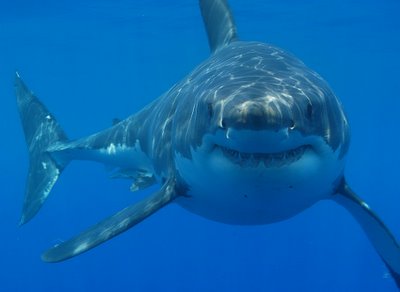
 I read the whale ordeal in different online news papers around the world.




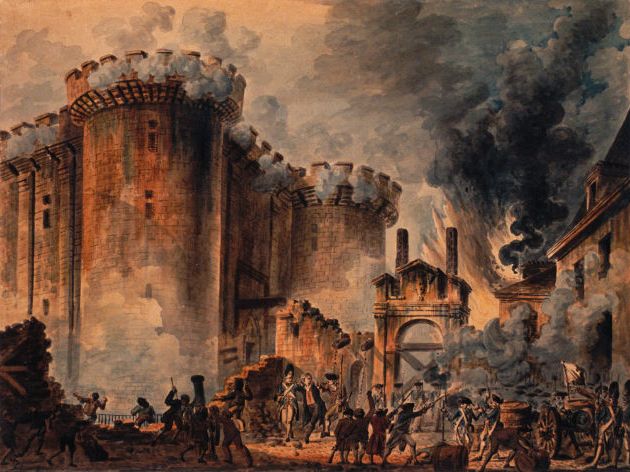



Previously, honour figured largely as a guiding principle of society, functioning as part of a code of honour for a gentleman and often coming to expression in the practice of duelling. One's honour, that of one's wife, of one's (blood-)family or of one's beloved formed an all-important issue: the archetypal "man of honour" remained ever alert for any insult, actual or suspected: for either would impugn his honour.
The concept of honour appears to have declined in importance in the modern secular West. Popular stereotypes would have it surviving more definitively in alleged "hot-blooded" Mediterranean cultures (Italian, Arab, Iberian...) or in more "gentlemanly" societies (like the "Old South" of Dixie). Feudal or other agrarian societies, focused upon land use and land ownership, may tend to honour "honour" more than do deracinated industrial societies. Traces of the importance attached to honour linger in the military (officers may conduct a court of honour) and in organisations with military echoes, such as Scouting.
"Honour" in the case of females is frequently related, historically, to sexuality: preservation of "honour" equated primarily to maintenance of virginity, or at least to preservation of exclusive monogamy. One can speculate that feminism has changed some linguistic usage in this respect.
One can contrast cultures of honour with cultures of law. From the viewpoint of anthropology, cultures of honour typically appear among nomadic peoples and herdsmen who carry their most valuable property with them and risk having it stolen, without having recourse to law enforcement or government. In this situation, inspiring fear forms a better strategy than promoting friendship; and cultivating a reputation for swift and disproportionate revengeMontesquieu to Steven Pinker have remarked upon the mindset needed for a culture of honour. increases the safety of one's person and property. Thinkers ranging from
Cultures of honour therefore appear amongst Bedouins, Scottish and English herdsmen of the Border country, and many similar peoples, who have little allegiance to a national government; among cowboys, frontiersmen, and ranchers of the American West, where official law-enforcement often remained out of reach, as is famously celebrated in Westerns; among the plantation culture of the American South, and among aristocrats, who enjoy hereditaryprivileges that put them beyond the reach of codes of law. Cultures of honour also flourish in criminal underworlds and gangs, whose members carry large amounts of cash and contraband and cannot complain to the law if it is stolen.
Once a culture of honour exists, it is difficult for its members to make the transition to a culture of law; this requires that people become willing to back down and refuse to immediately retaliate, and from the viewpoint of the culture of honour, this tends to appear to be an unwise act reflecting weakness.
Conceptions of honour vary widely between cultures; in some cultures, honour killings of (usually female) members of one's own family are considered justified if they have "defiled the family's honour" by marrying against one's wishes, or even by being the victims of rape. These honour killings are generally seen in the West as a way of men using the culture of honour to control female sexuality.
In contemporary international relations, the concept of "credibility" resembles that of honour, as when the credibility of a state or of an alliance appears to be at stake, and honour-bound politicians call for drastic measures.
Compare the concepts of integrity, face (social custom) in stereotyped Oriental cultures, or of mana in Polynesian society.
For a similar concept with many connotations opposite to honour, see shame.
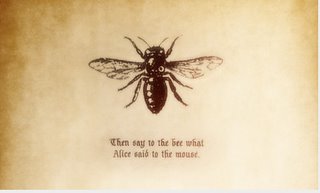


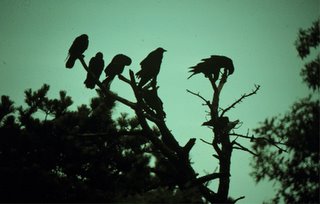
Supodselly crows and ravens articulate sounds (the noisy interventions in groups) not to convey concepts but to express emotions...So a gathering of noisy crows is a poetry jam! Awesome birds...
Two things that I found funny when researching good liks for this entry: some individuals are obsessed in finding "white" crows...(white whatever, to give sense to their white ideals)...weird individuals. Some other individuals (most of humans i'm afraid) think of brave and selfsuficient animals as pest. Like animals have no right to survive finding food in our mess...researching about animals we find more thruth about humans, I think.


 prise and mostly to follow. I think religion (any religion) is a face on human social development that should be left as a bunch of fear on punishment (from the hand of a male god) mixed with faith on what it can not be explained, and of course all sort of social constructs to opress who rebels against the monopoly of faith based power. It is a power based on opression, ignorance, superstition, mediocrecy, with a veil of superficial mercy on others (mercy on who, I would ask).

Matt Woolman
Digital Information Graphics
Goal
VisualComplexity.com intends to be a unified resource space for anyone interested in the visualization of complex networks. The project main goal is to leverage a critical understanding of different visualization methods, across a series of disciplines, as diverse as Biology, Social Networks or the World Wide Web. I truly hope this space can inspire, motivate and enlighten any person doing research on this field.
Not all projects shown here are genuine complex networks, in the sense that they aren’t necessarily at the edge of chaos, or show an irregular and systematic degree of connectivity. However, the projects that apparently skip this class were chosen for two important reasons. They either provide advancement in terms of visual depiction techniques/methods or show conceptual uniqueness and originality in the choice of a subject. Nevertheless, all projects have one trait in common: the whole is always more than the sum of its parts.
A bon mot of brilliance delivered back when by Estée Lauder, one her son Leonard Lauder takes considerable delight in repeating.
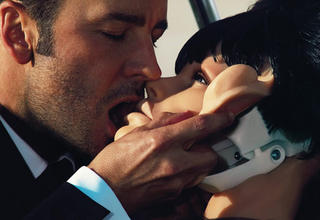
Assuming the beauty doyenne was correct, these should be heady times for the house she founded. This month will see the first fruits of Lauder's curious marriage with Tom Ford, the man for whom sex and style are virtually synonymous. "We've always tried to position ourselves where we're selling something that's really sexy," says Leonard Lauder, the company chairman. "That's the cornerstone of Estée Lauder."
W: These pictures look futuristic-creepy—not a celebration of beauty.
TF: We are futuristic; we're on the cusp of being able to manipulate humans genetically to grow into whatever we think looks good. The moment we can start manipulating genes, how long are our legs going to get? Beauty used to be all about cream and lotions, and now it's not. It's about Botox. It's about fillers. It's about mini facelifts. We've reached a level of manipulation. And then of course I'm portrayed as the one doing the manipulating…the polishing, buffing, shaping, which is what I do. It's just what we do. What the fashion industry does.
 A couple of designers from portugal came with this design for bedding sheets: